
“10 Timeless Nordic Interior Design Ideas For A Minimal Yet Warm Home”
Many Nordic design principles guide you to a minimal yet warm home by combining natural light, simple forms, soft textiles, muted palettes, functional storage, greenery, and layered lighting to balance practicality with cozy atmosphere.
Key Takeaways:
- Light, neutral color palette and abundant natural light create an airy, minimal foundation.
- Natural materials like pale woods, wool, leather, and stone introduce organic warmth and texture.
- Functional furniture with clean lines and multipurpose pieces maintains simplicity and practicality.
- Layered textiles-rugs, throws, and cushions-combined with warm ambient lighting produce a cozy atmosphere.
- Minimal decor, curated personal accents, and smart storage keep spaces uncluttered yet inviting.
The Philosophy of Scandi Design: Lagom and Hygge
Scandi philosophy blends lagom and hygge so you aim for moderation and cozy contentment, choosing uncluttered forms, tactile textiles, and soft lighting to create a calm, hospitable home that feels both practical and warmly inviting.
Finding the Balance Between Functionalism and Comfort
Balance asks you to pair streamlined storage and multipurpose furniture with plush cushions and warm textiles, so everyday function never sacrifices comfort and your rooms remain uncluttered yet welcoming.
Cultivating a Sense of Warmth and Well-being
Light guides you to layer natural daylight with soft lamps and candles, introducing gentle contrasts and shadows that make spaces feel nurturing and restore your sense of calm.
Texture encourages you to mix natural wools, linen, and brushed wood to create tactile layers; add a soft rug, knit throws, and woven baskets so surfaces invite touch and signal comfort, while plants and muted color palettes support mental ease and a lived-in, serene atmosphere.
Mastering the Neutral Color Palette
Balance soft neutrals with warm textures so your space feels minimal yet inviting, using wood, wool, and matte finishes to avoid flatness while keeping calm.
Layering Whites, Grays, and Muted Earth Tones
Layer whites, grays, and muted earth tones in varying textures and finishes so you create subtle depth; mix warm wood and natural fibers to prevent sterility.
Utilizing High-Contrast Accents for Visual Depth
Introduce black, deep navy, or forest green accents sparingly through frames, textiles, or lighting so you add sculptural focus without fighting the neutral base.
Select accent pieces with strong silhouettes and materials-metal, stone, or matte ceramics-to create contrast that guides your eye and anchors furniture groupings; keep repetition to two or three accent tones.
Prioritizing Natural Materials and Textures
Choose natural materials like light wood, stone and wool to add warmth without clutter; their textures will anchor your minimalist rooms while offering lasting character.
Incorporating Light Woods and Organic Stone
Use pale woods and soft-grained stone for your floors, countertops and furniture to keep spaces airy while adding tactile depth and natural variation.
Softening Minimalist Spaces with Wool and Linen Textiles
Layer wool throws and linen drapes to soften your clean lines, introduce subtle patterns and regulate temperature for year-round comfort.
Pair chunky knit throws, braided rugs and lightweight linen cushions in muted tones to create layered contrast without clutter; mix coarse wool, smooth linen and soft cotton so you invite touch, and rotate textiles seasonally while following gentle washing or airing to preserve loft, color and natural feel.
Maximizing Natural Light and Spatial Flow
Light should flow through open sightlines and low-profile furniture so you can maximize brightness and movement between rooms.
Strategic Window Treatments and Reflective Surfaces
Choose sheer curtains, slim blinds, and well-placed mirrors so you can control glare without blocking daylight and bounce light into darker corners.
Decluttering to Enhance Airiness and Movement
Clear surfaces and hide everyday items in minimalist storage so you can preserve visual calm and allow uninterrupted circulation throughout your home.
Practical decluttering means editing possessions down to what you use and love, then assigning a home for each item so you can move freely and clean quickly. Rotate seasonal pieces and stash extras in drawers, baskets, or built-in shelving to keep surfaces breathable while keeping necessarys accessible.
Functional Furniture and Statement Lighting
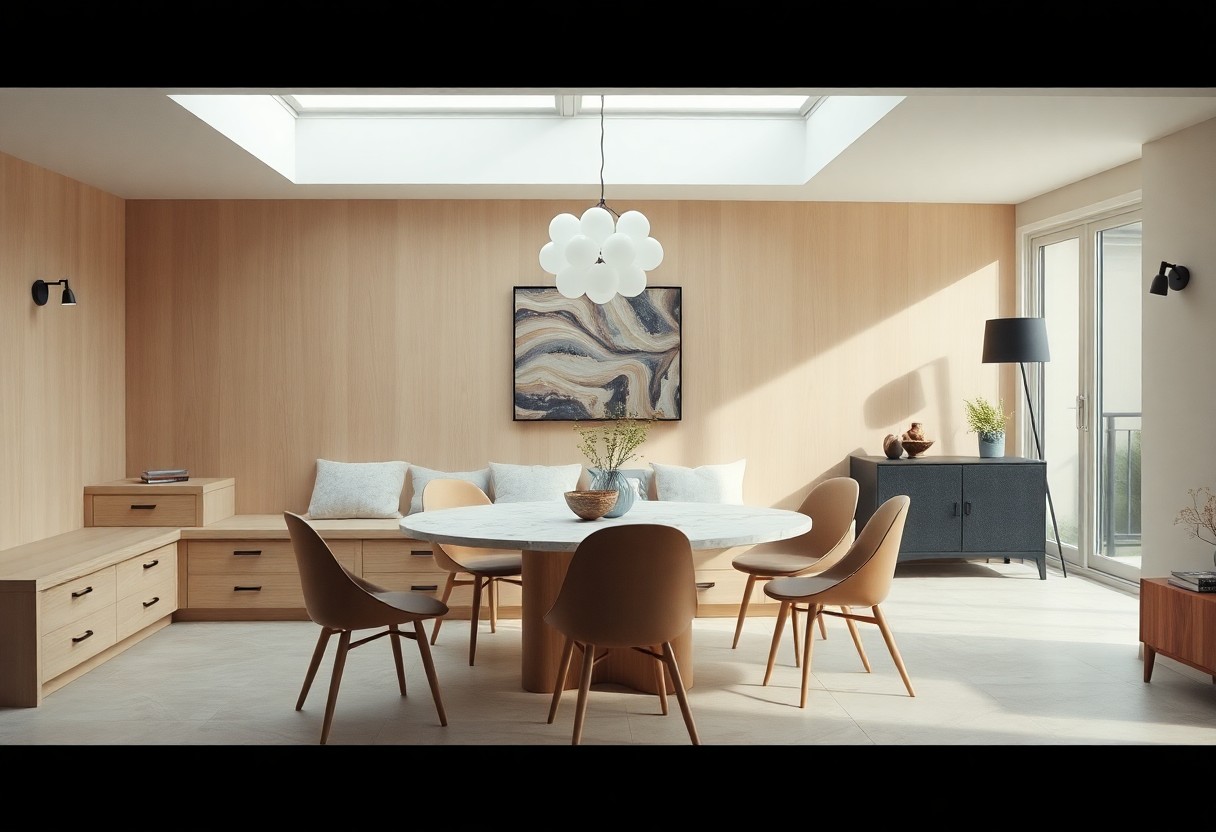
Pair functional furniture with statement lighting so you can maintain minimal lines while adding tactile warmth through wood tones and soft illumination.
Selecting Timeless Mid-Century Modern Silhouettes
Choose mid-century silhouettes with clean lines and generous proportions so you can mix storage and comfort without clutter, focusing on oak or walnut frames and simple upholstery.
Using Sculptural Light Fixtures as Functional Art
Let sculptural fixtures act as focal pieces that provide layered light and hand-crafted texture, helping you define zones and add personality without excess decor.
Consider scale, finish and dimming: choose warm LEDs, matte metals or blown glass, hang pendants to frame seating or dining surfaces, and balance sculptural pieces with simple furniture so you keep function primary and art integrated.
Bringing the Outdoors In
Natural light and tactile elements like wood, stone, and plants will warm your minimal interiors without clutter, creating a calm, lived-in feeling that still reads modern.
The Role of Greenery in Biophilic Design
Indoor plants improve air quality and texture, letting you connect with nature through simple gestures-cluster pots, hang vines, or keep a small herb windowsill to brighten mood and soften minimal lines.
Sustainable Sourcing for Long-Term Home Vitality
Choose locally made, certified materials and secondhand pieces to reduce environmental impact while ensuring you have durable, repairable items that age gracefully in a Nordic home.
Prioritize certified wood (FSC), organic textiles (GOTS), and low-VOC finishes so your choices support ecosystems and indoor health. Work with local craftsmen and choose repairs over replacement to extend lifespan. Opt for classic silhouettes and modular pieces that you can reupholster or repurpose, reducing waste and keeping your home warm over decades.
Conclusion
With these considerations, you can craft a timeless Nordic interior that balances minimalism and warmth by prioritizing natural light, layered textures, functional furniture, and muted palettes, creating a calm, practical home that feels inviting year-round.
FAQ
Q: What are the core principles behind Nordic interior design and how do they create a minimal yet warm home?
A: Core principles of Nordic design include simplicity, usability and an emphasis on natural light. Minimal ornamentation pairs with high-quality materials and thoughtful craftsmanship to avoid clutter while maintaining character. Hygge-inspired elements introduce warmth through texture and lighting rather than extra objects, and careful proportion and function ensure each piece serves a purpose.
Q: How can I add warmth to a minimalist Nordic interior without losing the clean aesthetic?
A: Warmth comes from layering natural materials and soft textiles such as wool rugs, linen curtains and cashmere or wool throws. Light-toned woods and brass or matte black accents add visual depth without overwhelming the space. Strategic use of area rugs, textured cushions and a few well-chosen decorative items creates cozy zones while preserving open sightlines and simplicity.
Q: What color palettes and materials work best for a timeless Nordic look?
A: The palette stays neutral: whites, soft grays, warm beiges and muted pastels provide a calm backdrop. Light woods like oak and pine, stone, leather and natural fibers such as cotton, wool and linen deliver tactile interest. Small contrasts with deep charcoal or black for fixtures and slim furniture legs help define shapes and prevent the space from feeling flat.
Q: What lighting strategies should I use to keep a minimal space feeling inviting year-round?
A: Maximize natural light by using sheer window treatments or leaving windows unobstructed. Combine ambient, task and accent lighting through ceiling fixtures, pendant lamps, floor lamps and table lamps to create layers of light. Choose warm color-temperature bulbs around 2700-3000K, install dimmers where possible and add candles or a small lamp for intimate evenings.
Q: How do I choose and arrange furniture to maintain minimalism while ensuring comfort and practicality?
A: Select furniture with clean lines, solid construction and multifunctional features such as storage benches or extendable tables. Scale pieces to the proportions of each room and leave breathing space around furniture to preserve an airy feel. Built-in or concealed storage keeps belongings organized, and mixing a few vintage pieces with modern items adds personality without cluttering the composition.