
“Lighting The Nordic Way – How To Choose Scandinavian Lighting Design For Every Room”
Just use clear guidelines so you can choose Scandinavian lighting for every room, balancing natural light, warm tones, and minimalist fixtures to create functional, inviting spaces that suit mood and activity.
Key Takeaways:
- Scandinavian lighting prioritizes natural light, clean lines, and warm, diffused illumination to create airy, welcoming spaces.
- Layer lighting by combining ambient, task, and accent fixtures to achieve functional and cozy atmospheres in each room.
- Choose materials like wood, matte metal, glass, and textile shades to complement minimalist furniture and add tactile warmth.
- Scale fixtures to room size: pendant clusters or oversized pendants for high ceilings; floor and table lamps for corners and reading nooks.
- Opt for adjustable, dimmable solutions and bulbs with warm color temperatures (2700-3000K) to control mood and mimic natural evening light.
Core Principles of Scandinavian Lighting Philosophy
Scandinavian lighting prioritizes soft, functional illumination so you can craft calm, useful interiors. Favor warm color temperatures, clean fixtures, and flexible controls; use dimmers and varied lamp types to mirror daylight and support different moods throughout the day.
The Rule of Three: Layering Ambient, Task, and Accent Light
Balance ambient, task, and accent layers so you can control both function and atmosphere in each room. Combine overhead lighting with focused task lamps and directional accents; adjust placement and dimming to avoid glare and add spatial depth.
Emphasizing Natural Materials and Minimalist Form
Materials like oak, wool, ceramics, and matte metals help you maintain tactile simplicity while supporting warm illumination; select lamps with clean silhouettes and visible joinery that complement rather than compete with your décor.
Wood and hand-blown glass pair especially well with soft LED bulbs, allowing you to mix textures-unvarnished timber, brushed brass, or neutral textiles-so fixtures read as crafted objects. Opt for understated shapes and finishes that age gracefully to ensure your lighting feels timeless and perfectly suited to daily living.
The Living Room: Cultivating Hygge and Comfort
Light should be layered to create cosy corners, warm tones, and flexible task lighting so you can read, relax, or entertain with Scandinavian simplicity.
Using Statement Floor Lamps as Sculptural Elements
Choose a sculptural floor lamp to anchor seating areas, combining form and function so you can add personality without clutter while maintaining clean Nordic lines.
Soft Diffusion Techniques for a Warm, Inviting Glow
Diffuse light with frosted shades, linen lampshades, or dimmable bulbs so you can wash walls in a gentle glow that encourages lingering and conversation.
Experiment with warm CCT bulbs (2200-3000K), high CRI options, and dimmers so you can tailor atmosphere for morning coffee or evening lounging. Use layered sources-uplights, table lamps, and concealed LED strips-to soften shadows. Position shades to hide bulbs and bounce light off ceilings or pale walls, minimizing glare while keeping the space intimate and visually balanced.
Kitchen and Dining: Merging Utility with Aesthetics
Kitchen lighting should balance task clarity and warm ambience; you should choose adjustable under-cabinet LEDs, matte fixtures, and dimmable overheads to keep prep areas bright and dining zones cozy.
Strategic Task Lighting for Culinary Workspaces
Position focused lighting directly over chopping boards and stove zones so you can see true colors and textures; opt for high-CRI LEDs and layered sources to reduce shadows while you work.
Iconic Pendant Placement for Focused Dining Ambience
Hang pendants at roughly 30 to 36 inches above the table so you frame meals and create intimate pools of light; choose scale and finish that complement your dining set without overpowering the space.
Choose pendant sizes and spacing to match your table: aim for fixtures whose combined widths cover about two-thirds of the tabletop, or pick individual shades roughly one-third the table’s width. Mount them 28 to 36 inches above the surface for balanced sightlines, space multiple pendants 24 to 30 inches center-to-center, use warm 2700-3000K bulbs, and add a dimmer so you can fine-tune mood and reduce glare.
The Bedroom: Designing a Serene Retreat
Serene lighting in the bedroom blends warm, diffuse fixtures, layered controls and soft accent light so you can unwind, read, and sleep without harsh glare or overstimulation.
Low-Lumen Solutions for Restorative Environments
Choose low-lumen fixtures and warm 2200-2700K bulbs with dimmers or smart scenes so you can reduce blue light and support your circadian rhythm for deeper sleep.
Space-Saving Wall Sconces and Bedside Functionality
Mount slim wall sconces with adjustable arms to free bedside tables while giving you focused reading light, easy-to-reach switches and integrated USB charging.
Select a sconce positioned about 40-50 cm above the mattress top and 30-40 cm from the pillow edge so you can angle light for reading without disturbing a partner. Aim for 300-500 lumens and a warm 2700K for comfortable task light; choose adjustable arms or swivel heads to direct beam where you need it. Prefer models with built-in dimmers, touch controls or USB outlets if you use devices at night, and pick finishes that complement Scandinavian minimalism.
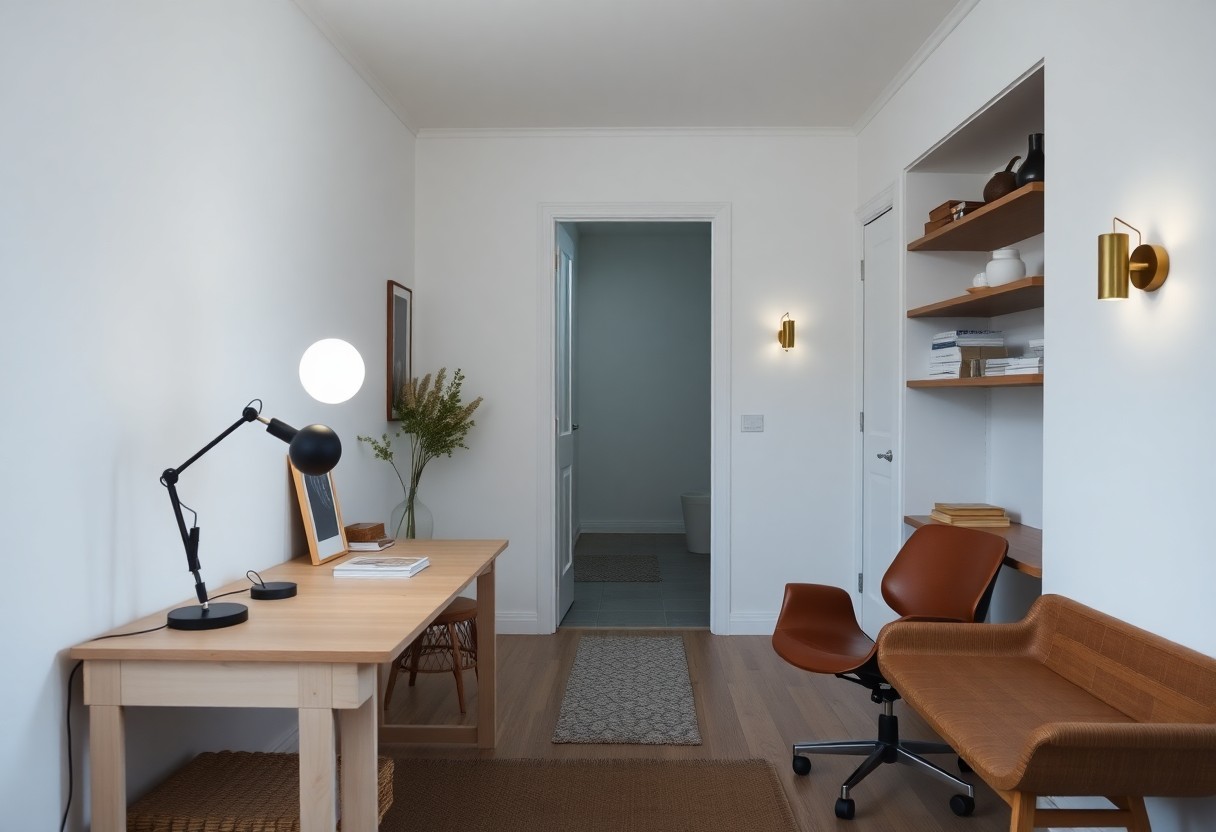
Home Office and Hallways: Clarity and Flow
You can balance task and ambient lighting with warm, high‑CRI bulbs and slim fixtures; this supports focus in your home office and clear sightlines in hallways. Layer desk lamps, overheads, and wall‑mounted lights to prevent glare and guide movement between rooms without overwhelming the minimalist Scandinavian palette.
Ergonomic Desk Lamps for Enhanced Productivity
Choose adjustable desk lamps offering variable color temperature and tilt so you reduce eye strain and keep posture correct. Aim for focused beams for tasks plus soft ambient spill to illuminate surrounding surfaces; clean lines and natural materials will match Scandinavian restraint while prioritizing comfort.
Brightening Transitional Spaces with Subtle Fixtures
Opt for low‑profile wall sconces, recessed strips, or pendant clusters to lift hallways and landings without visual clutter. Use warm 2700-3000K light and dimmable drivers to set mood while maintaining visibility; subtle contrasts and indirect glare control keep flow and respect Scandinavian minimalism.
Use layered low‑temperature LEDs and reflective surfaces to bounce light gently, highlighting artwork, runner rugs, and steps while avoiding hotspots. Position fixtures to create rhythm and safe sightlines; frosted diffusers and dimming preserve ambiance so you maintain inviting transitions aligned with Scandinavian restraint.
Technical Selection for the Nordic Look
Technical specs guide your Nordic lighting choices: focus on lumen output per room, fixture scale, and CRI above 90 to maintain natural tones without overpowering minimal interiors.
Mastering Color Temperature and Kelvin Ratings
Warm tones (2700-3000K) create coziness; cooler 3000-4000K supports tasks. You should pick Kelvin to match activity and daylight, blending layers to sustain Scandinavian clarity and comfort.
Kelvin Quick Guide
| Kelvin | Recommended Rooms |
|---|---|
| 2700K | Bedrooms, living rooms |
| 3000K | Dining, general living |
| 3500-4000K | Kitchens, bathrooms, work areas |
The Essential Role of Dimmers and Light Control
Dimmers let you fine-tune brightness for time of day and tasks, keeping lines clean while creating layered scenes; pair with smart controls for effortless mood shifts.
You should install dimmable LED drivers compatible with your fixtures, choose trailing-edge dimmers for smooth low-end performance, and verify hub or wall-switch compatibility to avoid flicker. Test dimming ranges in each room and program scenes for routines-bright for tasks, warm and low for evenings, and accent for highlighting textures and art.
Summing up
Summing up, you can choose Scandinavian lighting by prioritizing functional warmth, scale, and layered sources-mix ambient, task, and accent light, select natural materials and matte finishes, and match fixture size to room proportions to create cohesive, light-filled spaces that suit each room’s purpose.
FAQ
Q: What defines Scandinavian lighting design?
A: Scandinavian lighting design emphasizes simplicity, functionality, and a strong connection to natural light. Designs favor clean lines, neutral tones, and materials such as wood, frosted glass, paper, and matte metal. Fixtures aim to diffuse light softly to reduce glare and create a warm, inviting glow that compensates for long, dark winters. Craftsmanship and timeless forms make pieces both decorative and practical.
Q: How do I choose Scandinavian lighting for the living room?
A: Start by layering three types of light: ambient for overall illumination, task for reading and specific activities, and accent to highlight architectural features or artwork. Select a large pendant or statement fixture for ambient light and add a floor lamp or table lamps near seating for task light. Pick warm color temperatures (2700-3000K) and dimmers to adjust mood. Match fixture scale to room size and ceiling height so the design feels balanced rather than overpowering.
Q: What lighting suits bedrooms and dining rooms in a Scandinavian home?
A: Bedroom lighting should prioritize softness and control: use a diffuse ceiling fixture or pendant for ambient light plus bedside lamps for task lighting and dimmers for low-level illumination before sleep. Dining rooms benefit from a central pendant placed 60-75 cm above the table for focused yet cozy light; choose a design with a warm color temperature and the ability to dim for different occasions. Natural materials and subdued colors keep the look cohesive and calm.
Q: Which lighting choices work best for kitchens and bathrooms with Scandinavian style?
A: Kitchens need bright, even task lighting: under-cabinet LEDs for counters, focused pendants over islands, and recessed or track lighting for general coverage. Opt for LEDs with good color rendering (CRI > 90) and around 3000K for a clean but warm feel. Bathrooms require moisture-rated fixtures (check IP ratings), balanced vanity lighting at eye level to reduce shadows, and a ceiling fixture or recessed lights for ambient illumination. Simpler forms and durable finishes suit both rooms.
Q: What bulbs, finishes, and placement tips should I use to achieve an authentic Scandinavian look?
A: Choose LED bulbs with high CRI (>90) and warm color temperatures (2700-3000K for living and sleeping areas, around 3000K for kitchens). Select finishes like matte white, black, brushed brass, or natural wood to keep the palette restrained. Size fixtures according to room dimensions and hang pendants at appropriate heights to maintain proportions. Use dimmers and layered circuits to control light levels. Maintain fixtures by dusting soft surfaces and replacing bulbs before they degrade in color quality.